Summer in South Florida does not ease in gradually. One week the weather is tolerable and the next the heat is sitting at ninety-five degrees, the humidity is suffocating, and every household in Broward County is headed outside. If your pool is not ready for that, you are either spending the summer staring at a problem you ignored or rushing to get repairs done during the busiest and most expensive time of year to book a contractor.
The homeowners who end up in that position almost always had warning signs months earlier. A crack that seemed minor. A surface that felt a little rough. A tile line that stayed stained no matter how much chemical went in. Small things that got pushed down the priority list until they were no longer small.
This is what those warning signs actually look like, what they mean, and when the smarter call is renovation rather than another round of repairs.
Your Pool Is Losing Water and It Is Not Evaporation
Every pool loses some water to evaporation in South Florida’s heat. That is normal. What is not normal is dropping more than a quarter inch per day or noticing the water level falling faster than the weather explains.
Pool leaks in Florida are one of the most misunderstood problems homeowners deal with because the source is rarely obvious from the surface. The water goes somewhere, but finding exactly where takes more than a visual inspection. The leak could be coming from a crack in the shell, a failing fitting, a plumbing line under the deck, or a structural gap that opened up over time.
The problem with treating a leak as a simple repair is that the source of the leak usually tells you something about the overall condition of the pool. A shell crack that is leaking is not an isolated problem. It is a sign that the structure has moved, settled, or deteriorated to a point where patching the crack alone does not address what caused it. Pool renovations in Broward, FL that address the underlying structure rather than just the visible symptom produce a result that actually holds up instead of requiring the same repair again eighteen months later.
The Surface Feels Rough and Is Getting Worse
A pool interior that felt smooth when it was new and now feels abrasive underfoot has reached the end of its finish lifespan. Plaster surfaces in South Florida typically last between seven and twelve years depending on water chemistry and usage. When they start deteriorating, the surface does not just feel unpleasant. It becomes harder to keep clean, it stains more easily, and in some cases it becomes sharp enough to scratch skin and damage swimwear.
Homeowners often try to address this with chemical treatments, acid washing, or aggressive brushing. Those approaches buy time at best. They do not restore a surface that has genuinely worn out. Once the plaster starts breaking down across a significant portion of the pool, resurfacing is the only fix that actually changes the condition of the surface rather than temporarily improving its appearance.
Waiting on resurfacing once the signs are clear does not save money. It means the surface continues deteriorating while the pool costs the same to maintain, and the condition of the shell underneath becomes a more pressing concern the longer the failing finish sits on top of it.
Cracks Are Appearing in the Shell or the Deck
Not all pool cracks are equal, and the difference between a surface crack and a structural crack matters significantly when deciding whether repair or renovation is the right response.
Hairline cracks in the plaster finish are common and typically manageable with targeted repair. Pool cracks repair at that level is straightforward and appropriate when the crack is isolated, shallow, and not actively leaking.
Cracks that run through the shell rather than just the finish, cracks that are actively growing, cracks that appear in multiple locations, or cracks that are accompanied by water loss are a different category of problem entirely. Those cracks indicate structural movement. The pool shell has shifted, settled, or been compromised in a way that patching the visible crack does not resolve.
The same applies to the deck surrounding the pool. Cracks in the pool deck that are spreading, lifting, or creating uneven surfaces are not just a cosmetic issue. They are a safety concern around a wet environment, and they are a sign that the substrate underneath has moved in a way that will continue affecting the surface above it.
When cracks of that nature appear, the conversation shifts from repair to renovation. Pool renovations in Broward, FL that address structural issues properly, rather than applying a cosmetic fix over an unresolved problem, produce a result the homeowner is not dealing with again two seasons later.
The Tile Line Is Permanently Stained or Falling Off
The waterline tile on a pool takes constant exposure to fluctuating water levels, pool chemicals, sunscreens, and mineral deposits. Over time that exposure takes its toll. Staining that does not respond to cleaning is usually calcium buildup or chemical scaling that has permanently bonded to the tile surface. Tile that is cracking, popping off, or developing gaps has reached the end of its adhesion lifespan.
Homeowners frequently live with a deteriorating tile line longer than they should because it does not affect how the pool functions. The pool still holds water. The equipment still runs. But the tile line is one of the most visible elements of the entire pool, and a stained or failing tile line makes the whole installation look neglected regardless of how clean the water is.
Tile replacement is one of the more straightforward components of a renovation and one of the upgrades that delivers the most immediate visual difference. Combined with resurfacing, it changes the entire appearance of the pool in a way that isolated repairs never accomplish.
The Pool Design Looks Like It Belongs to a Different Decade
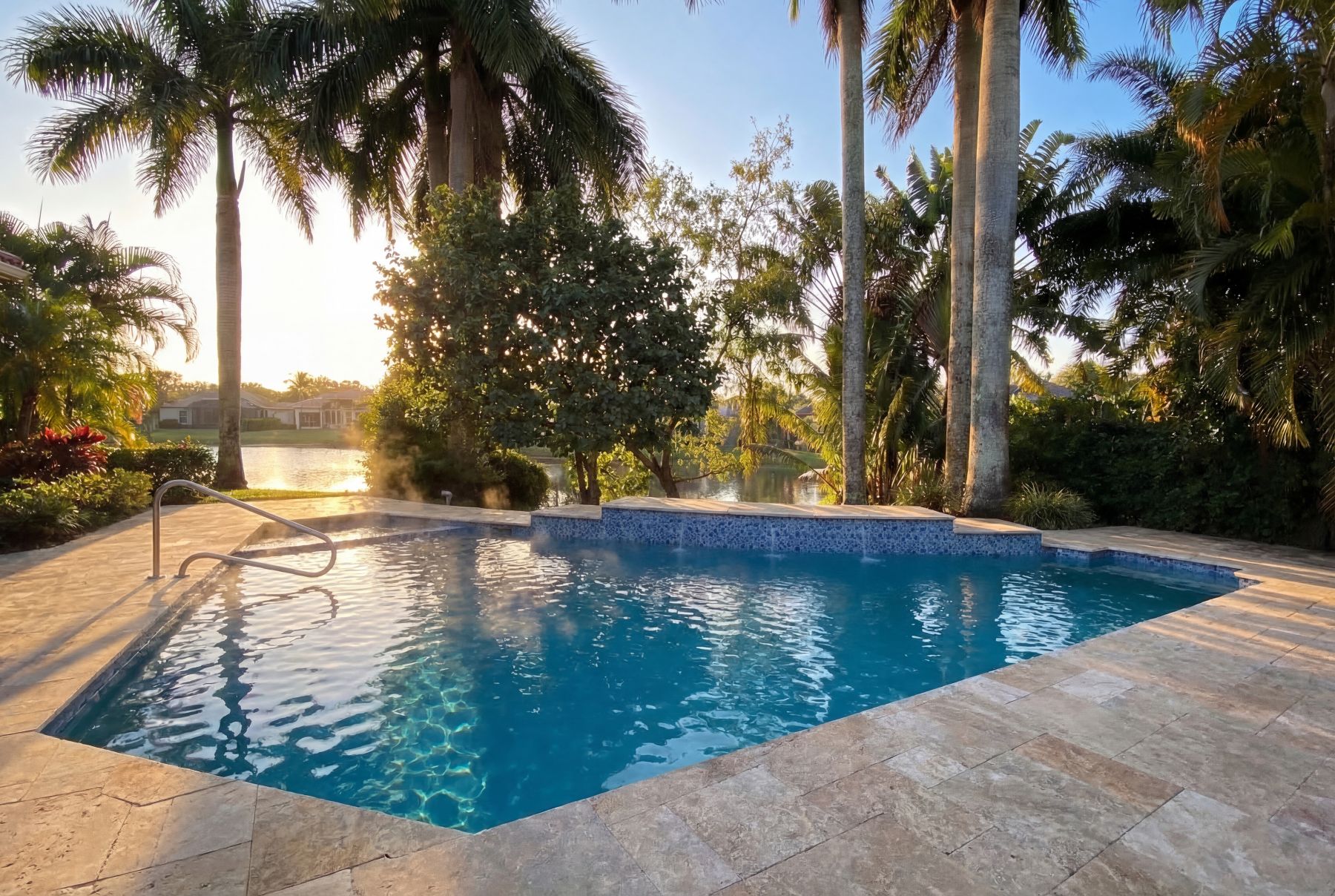
Not every sign that a pool needs renovation is structural. Some pools are in reasonable condition mechanically but look completely out of step with the property around them. An older pool design that made sense twenty years ago, with its dated coping style, its standard rectangular shape, and its basic finish, can make a well-maintained home feel older than it is.
Outdated pool design is one of the warning signs homeowners tend to dismiss because it does not feel urgent the way a crack or a leak does. But a pool that looks dated affects how the backyard feels to use, how it photographs, and how it contributes to the overall value of the property. In Palm Beach and Broward County’s real estate market, an outdated pool is not a neutral feature.
Pool renovations in Broward, FL that modernize the design alongside addressing surface and structural concerns produce a finished result that looks intentional from every angle rather than patched together over time. New coping, updated tile, a resurfaced interior, and reconfigured features can completely transform how a pool relates to the rest of the backyard without rebuilding from the ground up.
The Equipment Is Aging and the Running Costs Keep Climbing
An older pump, an inefficient filtration system, and outdated heating equipment cost more to run and deliver a worse result than current options. If the energy bills tied to running the pool have been creeping up over the years, the equipment is likely a significant part of the reason.
Equipment failure is also one of the more disruptive problems to deal with mid-summer in South Florida because the demand for pool contractors and parts is at its highest point of the year. A pump that fails in July means waiting longer and paying more to get back in the water than the same issue would cost in February.
Folding equipment upgrades into a broader renovation project rather than replacing components reactively as they fail is almost always more cost-effective. The pool is already out of service during a renovation. The contractor is already on site. Addressing equipment at that stage avoids a separate disruption later and brings the full installation up to a consistent standard rather than mixing new finishes with aging mechanical systems.
When to Stop Repairing and Start Renovating
The answer to that question is usually found by looking at the pattern rather than the individual problem. A single crack is a repair. A crack combined with surface deterioration, staining that will not clear, tile that keeps failing, and equipment that keeps needing attention is a renovation conversation.
Repair budgets that keep getting spent without meaningfully improving the condition of the pool are a reliable signal that the pool has crossed the line where renovation delivers better value than another round of targeted fixes. Each repair addresses one symptom while the underlying condition continues developing. Renovation addresses the pool as a whole and resets the timeline on how long it can be expected to perform without significant intervention.
South Florida summers do not leave much room for a pool that is not ready. Getting ahead of the warning signs before the season hits means the renovation is done on a planned timeline at a contractor’s regular rate, rather than rushed through during the peak of demand when availability is limited and costs reflect it.
Canet Group Inc. Handles Pool Renovations in Broward, FL
If your pool is showing any of these signs and you are not sure whether repair or renovation is the right call, Canet Group Inc. can give you a clear answer based on an actual assessment of the pool rather than a guess made over the phone.
Canet Group provides pool renovations in Broward, FL covering resurfacing, tile replacement, structural repairs, deck renovation, equipment upgrades, and full pool redesigns for homeowners who want the project done properly before summer arrives.
Book an on-site visit with Canet Group Inc. and get a clear plan for your pool before the season starts.
FAQs: Pool Renovations in Broward, FL
How do I know if my pool needs renovation or just a repair?
A single isolated issue like a hairline crack or a failing fitting is usually a repair. When multiple problems are showing up at the same time, such as surface deterioration, active leaks, failing tile, and aging equipment, the pool has likely crossed the point where renovation delivers better value than continuing to address each problem individually. Pool renovations in Broward, FL make the most sense when repair costs keep climbing without meaningfully improving the overall condition of the pool.
How serious are pool cracks in South Florida?
It depends on where the crack is and how deep it runs. Surface cracks in the plaster finish are common and manageable with targeted pool cracks repair. Cracks that run through the shell, appear in multiple locations, or are accompanied by water loss point to a structural problem that patching alone will not resolve. Those cracks are a sign that renovation, not repair, is the appropriate next step.
How can I tell if my pool is leaking or just losing water to evaporation?
A simple bucket test helps distinguish between the two. Fill a bucket with pool water and place it on a pool step so it sits at the same water level as the pool. Mark both levels and check after 24 hours. If the pool has lost significantly more water than the bucket, the pool is likely leaking rather than evaporating. Pool leaks in Florida left unaddressed cause damage to the surrounding structure, the deck, and the surrounding landscaping over time.
What are the most common signs that a pool surface needs resurfacing?
The clearest resurfacing signs are a surface that feels rough or abrasive underfoot, widespread staining that does not respond to chemical treatment, visible pitting or flaking across the interior, and a finish that has lost its color and looks permanently faded. When those signs appear across a significant portion of the pool rather than in isolated spots, resurfacing is the appropriate scope of work rather than spot repairs.
Does an outdated pool design affect property value in Broward County?
Yes. In Broward County’s real estate market, a pool that looks dated works against the overall presentation of the property even when it is mechanically functional. An outdated pool design with old coping, a worn finish, and a basic shape makes a well-maintained home feel older than it is. Renovation that modernizes the design alongside addressing surface and structural issues improves both how the backyard feels to use and how the property is perceived overall.
Is it cheaper to renovate the pool before summer or wait?
Renovating before summer is almost always the more cost-effective decision. Contractor availability tightens significantly during peak summer months in South Florida, and demand drives both pricing and wait times higher. A renovation planned and completed before the season starts means the project runs on a normal timeline at standard rates, and the pool is ready when the heat arrives rather than sitting out of service during the months it gets the most use.
Can pool equipment upgrades be included in a renovation project?
Yes, and folding equipment upgrades into a broader renovation is usually more cost-effective than replacing components separately as they fail. The pool is already out of service during a renovation and the contractor is already on site, so addressing aging equipment at that stage avoids a separate disruption later and brings the full installation up to a consistent standard.
How long does pool renovation take in Broward, FL?
The timeline depends on the scope of the project. A resurfacing and tile replacement project typically moves faster than a full renovation that includes structural repairs, deck work, and feature additions. Canet Group provides a specific timeline based on an on-site assessment of the pool and the confirmed scope of work, so there are no surprises once the project begins.